A Little Context
Footnotes to the Absurd
What’s on the way?
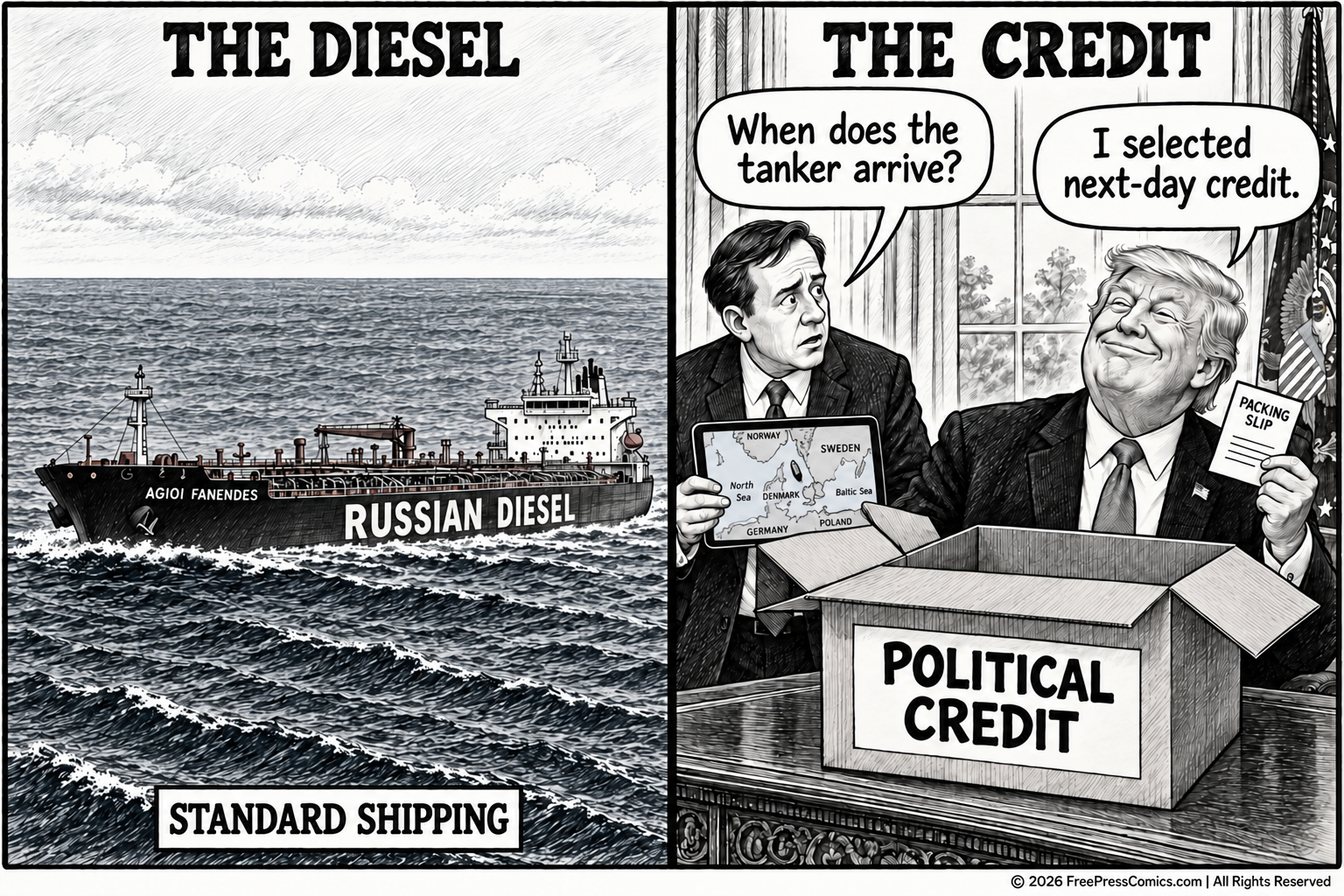
On October 23, 2026, shipping-data reporting identified the tanker AGIOI FANENDES as carrying approximately 40,000 metric tons of Russian diesel toward New York. The vessel departed Russia’s Baltic port of Primorsk on October 22, 2026. It is Malta-flagged: “Russian diesel” describes the cargo’s origin, not the ship’s nationality.
The announcement travels faster
Trump announced the diesel agreement on October 9, 2026, promoting additional Russian supply as a response to high fuel prices. His administration also waived parts of a new sanctions law against Russia.
Reuters reported an estimated U.S. arrival date of November 7, 2026, four days after the November 3 midterm elections. That was a shipping estimate, not confirmation of arrival. An arrival date alone also does not establish when, or whether, the agreement would affect retail prices.
How much relief?
The Associated Press described the initial cargo as roughly 300,000 barrels, about 7% of one day’s U.S. diesel consumption. Additional shipments were contemplated, but energy-policy experts questioned whether the agreement would substantially reduce prices.
Ukraine objected to the deal because Russian fuel sales provide revenue while Moscow continues its invasion.
Why “next-day credit”?
The cartoon separates two deliveries: the physical shipment still at sea and the political benefit already being claimed.
“Standard shipping” and the box labeled “Political Credit” are visual metaphors. The aide’s question and Trump’s answer, “I selected next-day credit,” are invented dialogue, not quotations.
The point is not that an announcement can never influence markets. It is that declaring a policy success is considerably faster than demonstrating one.